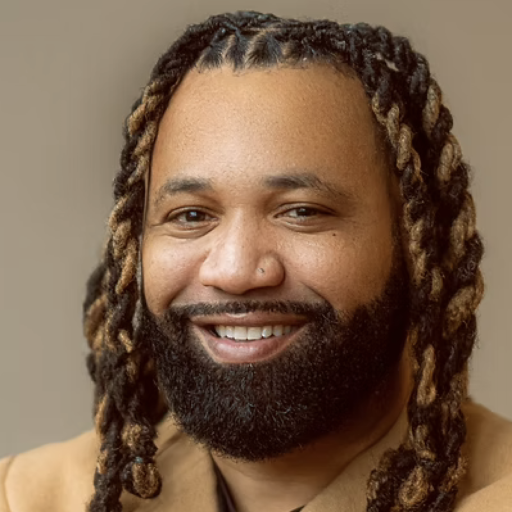
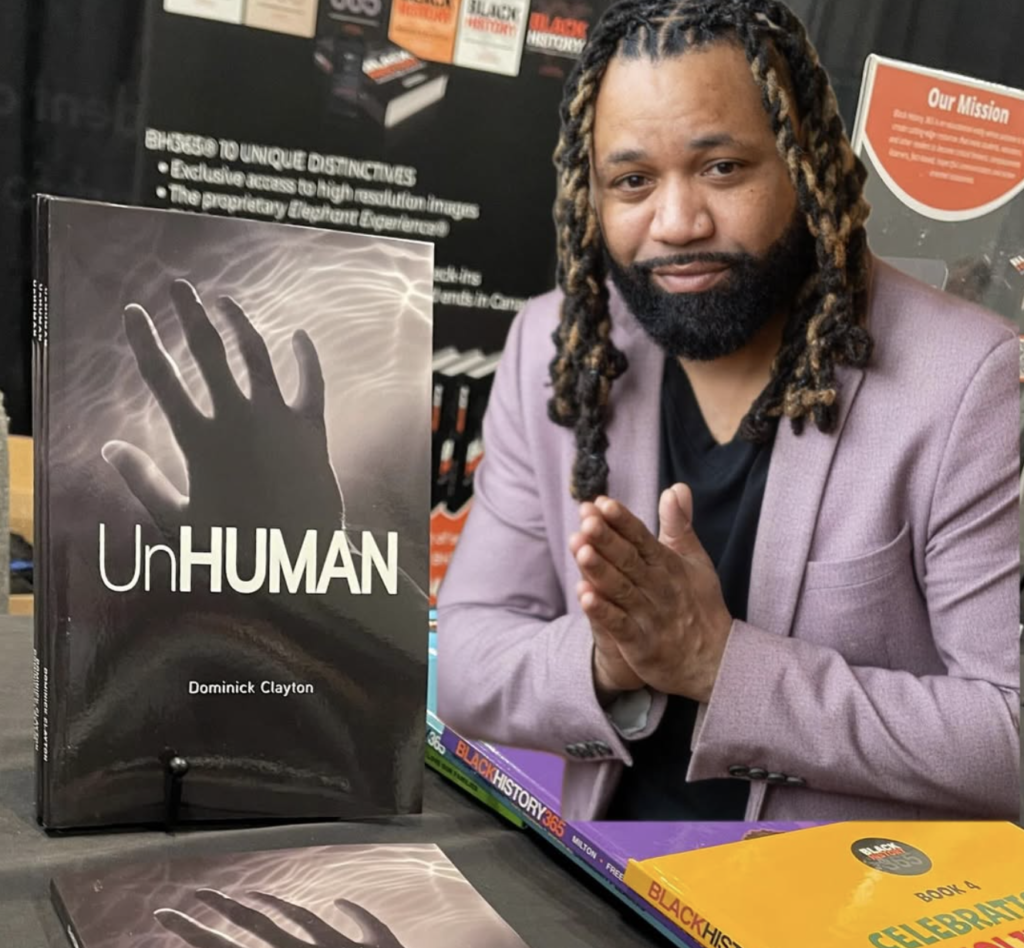
Dominick Clayton is an award-winning educator, author, actor, consultant, and public truth advocate whose work lives at the intersection of history, memory, and human becoming. Across the classroom, the page, and the public square, he has built a body of work concerned with what honest reckoning makes possible: deeper understanding, moral clarity, and a more human future.
Born in Orlando, Florida, Dominick Clayton graduated from John Carroll University with a bachelor’s degree in Business Administration with a major in marketing. While at John Carroll, he was an all-conference athlete in both football and track. After a brief pursuit of arena football, he began his career in education at his high school alma mater, Mt. Dora High School, as a special education math teacher. He later earned a master’s degree from Barry University focused on educational leadership and began his leadership journey in 2006 as an assistant principal at a low-performing high school.
That path matters because it explains the center of his work. Dominick’s professional biography points to a long-standing desire to “create and develop whole human beings,” and that same conviction runs through his public writing and teaching. His work does not treat history as inert information or identity as performance. It asks harder questions. What happens when a people are denied the full truth about the past? What is lost when distortion becomes normal? And what becomes possible when honesty returns to the room?
As a contributor to the Black History 365 curriculum and a member of its professional development team, Dominick has helped advance truth-centered educational engagement in spaces where historical memory is too often softened, trimmed, or made convenient. His work reflects a consistent commitment to confronting false narratives, challenging distortion, and making room for healing through truth.
That commitment is perhaps most visible in UnHUMAN, his book on dehumanization, historical memory, and moral repair. The book examines not only the dehumanization of the enslaved, but also the broader civic and moral damage left behind by slavery and its long afterlife in American life. It is framed not simply as history, but as a call to action for readers willing to move beyond passive agreement and into honest engagement.
Dominick has said that he knew staying with only “what was” would not be enough, and that he charted a path forward in UnHUMAN because truth should do more than expose injury; it should help us build a wiser future. That instinct captures the deeper purpose of his work. He is not interested in spectacle disguised as seriousness. He is interested in truth that changes people, memory that clarifies responsibility, and language strong enough to help communities imagine what they could yet become.
Today, Dominick Clayton’s work extends across writing, speaking, education, and public engagement. Whether through his book, his curriculum work, or his broader cultural presence, he continues to challenge audiences to face the past without disguise and to carry that honesty into the future with courage, dignity, and discipline.